-
Shop
- Advanced Technologies
- AI Skills Mastery 2026 Collection
- Apple Accessories
- Baby & Toddler
- Baking & Desserts
- Bathroom
- Budget Travel
- Car Accessories
- Clean & DIY Beauty
- Cleaning & Home Care
- Dating & Social Skills
- Digital Resources
- AI & Technology
- Beauty
- Budgeting & Saving
- Car Buying & Ownership
- Cozy Feast Collection
- Electronics & Technology
- Entrepreneurship & Business Growth
- Financial Education
- Financial Independence
- Financial Mindset & Psychology
- Goal Setting
- Home Styling & Organization
- Kitchen & Recipes
- Leadership
- Mindfulness
- Mindset
- Online Business
- Parenting & Child Development
- Personal Style & Fashion
- Pet Lifestyle & Wellness
- Positive Thinking
- Sleep Improvement
- Smart Life with AI
- Stress Management & Relaxation
- Travel Planning
- Wellness
- Yoga & Fitness
- Yoga & Mind-Body Practices
- Education & Learning
- Family & Parenting
- Family Travel
- Fashion
- Accessories
- Alexander McQueen
- Bags
- Bags & Wallets
- Balenciaga
- Belts
- Blazers
- Blouses & Shirts
- Bottega Veneta
- Bottoms
- Brunello Cucinelli
- Burberry
- Chanel
- Chloé
- Clothing
- Dior
- Dolce & Gabbana
- Dresses
- Etro
- Fendi
- Gucci
- Hats & Hair Accessories
- Hoodies & Sweatshirts
- Jacquemus
- Jewelry
- Jil Sander
- Keychains
- Kiton
- Luggage
- Luggage Bags
- Miu Miu
- Off-White
- Outerwear
- Prada
- Rick Owens
- Saint Laurent
- Scarves
- Socks & Tights
- Sweaters & Cardigans
- The Row
- Tom Ford
- Tops & Shirts
- Valentino
- Valentino Garavani
- Versace
- Vivienne Westwood
- Watches
- Fashion Accessories
- Furniture
- Gadgets
- Halloween
- Health & Beauty
- Health & Wellness
- Home & Garden
- Home Electronics
- Home Supplies
- Kids & Babies
- Kitchen
- Lighting
- Party Planning & Hosting
- Patio, Lawn & Garden
- Personal Growth
- Pet Care
- Pet Supplies
- Pets
- Relationships & Dating
- Self-Care
- Shoes
- Smart Amazon Shopping
- Sport & Outdoors
- Super Deals
- Thanksgiving
- Travel
- Wealth
- Wealth Building
A Calm, Dog-Friendly Home: Practical Setup Guide
25% off on product page · save $5.33
A Calm, Dog-Friendly Home: Practical Setup Guide
Begin With Safety, Predictability, and Choice
A reassuring home rests on three foundations: physical safety, a reasonably consistent daily rhythm, and choice. A dog should be able to approach family activity or retreat without being followed, cornered, or forced to interact.
Before rearranging anything, observe where your dog sleeps, which paths they use, and what causes tension. Pacing, unexplained panting, hiding, repeated lip licking, trembling, vigilance, or difficulty settling may indicate discomfort. Sudden behavioral changes can also signal pain or illness and should be discussed with a veterinarian.
Signs of Comfort and Possible Stress
| What You Notice | What It May Suggest | Helpful Adjustment |
|---|---|---|
| Loose posture and restful sleep | The location feels secure | Keep it consistent and prevent interruptions |
| Repeated pacing | Environmental discomfort | Reduce noise, check temperature, and offer a quieter bed |
| Avoiding slippery floors | Poor traction or physical discomfort | Add secured rugs or nonslip runners |
| Retreating during visits | A need for distance | Provide an accessible quiet zone |
| Guarding resources | Concern about losing valued items | Increase space and seek qualified help |
Featured in this guide
A Home Where Your Dog Feels Truly at Ease – Practical Guide for a Thoughtful Home Setup for Dogs, Calm, Comfort & Everyday Harmony
Create a Resting Zone That Feels Private
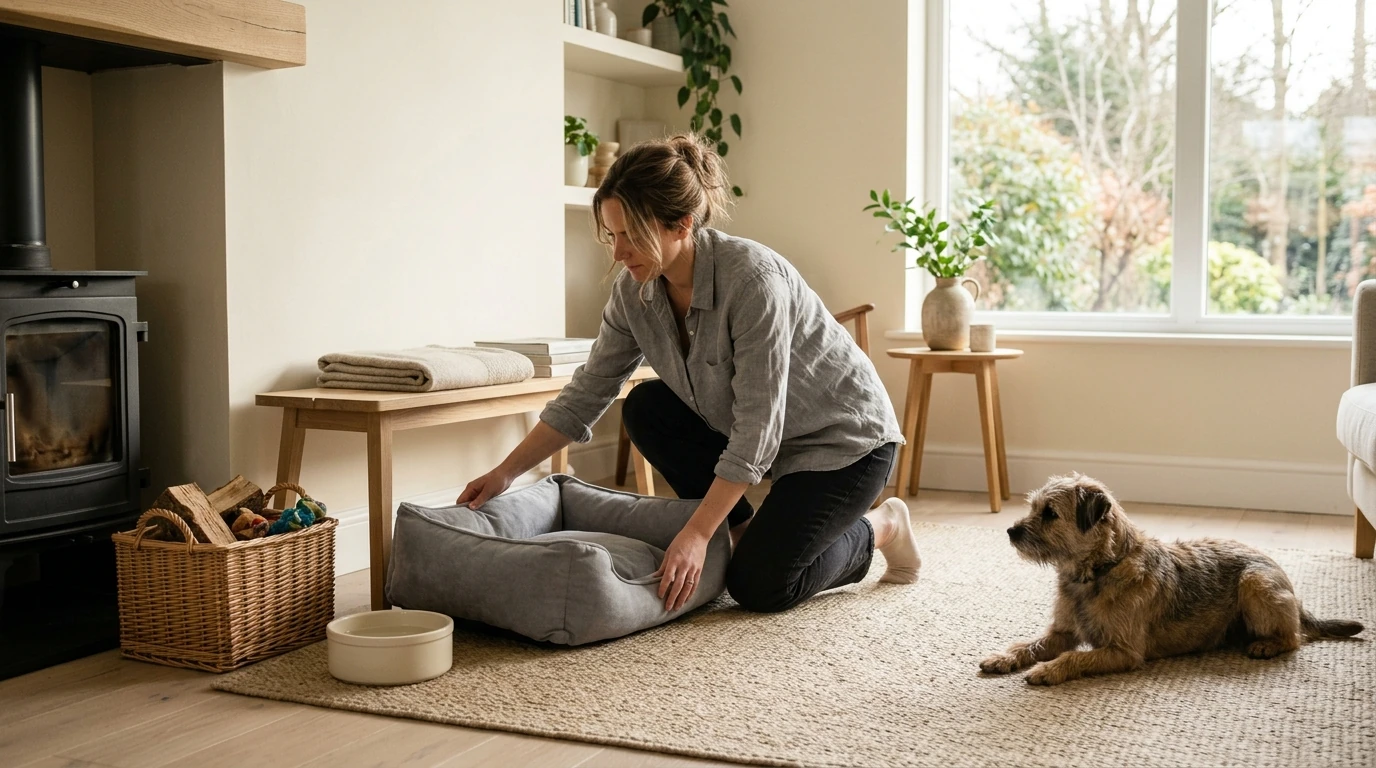
Place the primary resting area away from exterior doors, busy walkways, loud appliances, and children’s play zones. Choose stable, supportive bedding with a washable cover and enough room for natural stretching or curling. Avoid strong drafts, direct heat, and prolonged intense sunlight.
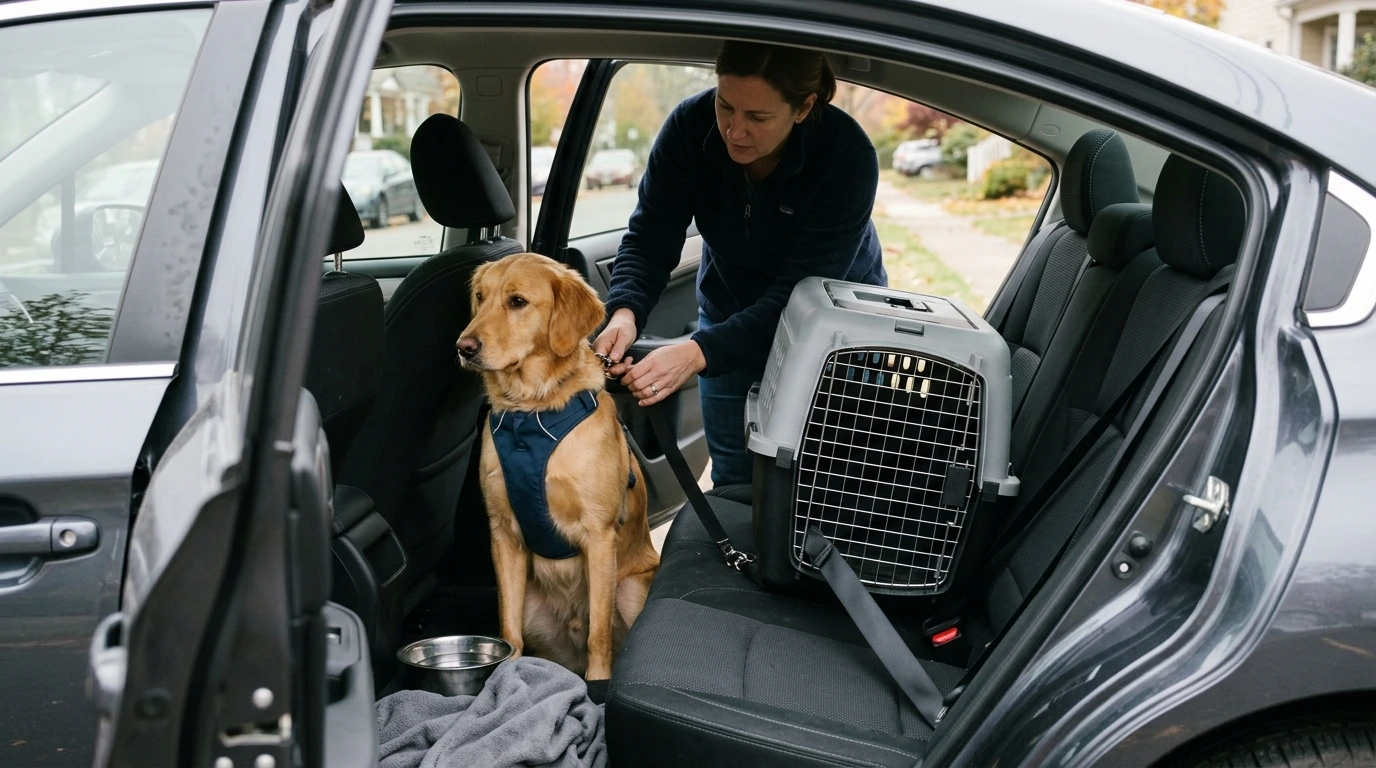
A crate can be an optional refuge when introduced positively, but it should never be used as punishment. Some dogs prefer an open bed or quiet corner. When possible, offer both a social bed near the family and a more secluded retreat elsewhere.
Everyone in the household should leave the dog undisturbed while resting, eating, or occupying a designated safe space.
Arrange Food, Water, and Everyday Essentials
Fresh water should be reachable without crossing slick floors, climbing unnecessary stairs, or passing through a closed door. Feed dogs in a consistent, calm location, separating pets when competition is possible. Bowl height or feeding methods may require veterinary guidance for puppies, seniors, large dogs, or dogs with medical conditions.
Secure food, medication, trash, cleaning products, cords, and swallowable objects. Gates and closed doors can restrict access to hazardous rooms, but barriers must not cut off water, rest, or safe outdoor access. Rotate suitable toys and remove damaged chews promptly.
Reduce Noise and Visual Overload
Doorbells, deliveries, street activity, vacuums, fireworks, raised voices, and constant television noise can interrupt relaxation. Curtains or privacy film can block stimulating views, while gentle background sound may soften unpredictable noises. Moving a bed away from windows and entryways can also reduce vigilance.
No paint color universally calms dogs. Dogs perceive blues and yellows more readily than reds and greens, but lighting intensity, contrast, familiarity, and learned associations generally matter more.
Introduce unavoidable sounds gradually at tolerable levels and pair them with rewards rather than overwhelming the dog. Severe fear, escape attempts, or aggression require veterinary or qualified behavioral support.
Build a Rhythm of Activity and Recovery
Create a sustainable rhythm around meals, outdoor breaks, walks, play, training, and sleep. Balance physical activity with sniffing, chewing, problem-solving, and recovery. Constant stimulation can make settling harder for some dogs.
Low-pressure options include scatter feeding, scent searches, food puzzles, appropriate chews, and short reward-based training sessions. Match activities to the individual rather than relying on breed stereotypes, adjusting for weather, confidence, mobility, and health.
To practice settling on a mat, quietly reward relaxed behavior without demanding long periods of stillness too quickly.
Check the listed dimensions for build a rhythm of activity and recovery against the available vehicle space before use.
Adapt the Home for Each Life Stage
Puppies need supervised exploration, frequent toilet access, protected sleep, durable toys, and careful management of cords and small objects.
Senior dogs often benefit from secured runners, ramps where appropriate, night lighting, supportive bedding, easy-access water, and shorter routes outdoors.
Newly adopted dogs may benefit from quiet first days, gradual access to rooms, and limited visitors. Preserve familiar bedding, food, and cues when possible. The 3-3-3 rule loosely suggests three days to decompress, three weeks to learn routines, and three months to feel established, but every dog follows an individual timeline.
Make the First Changes Small and Meaningful
Begin with inexpensive, high-impact adjustments: remove hazards, secure rugs, move the bed, block triggering views, and establish clear household boundaries.
Review the results after one or two weeks. Look for deeper sleep, confident movement, voluntary use of resting areas, and faster recovery after disturbances. Continue adapting the environment as health, preferences, and household circumstances change.
Compare related options such as Leopard Plush Steering Wheel Cover – Soft Non-Slip Winter Grip 15 in to match features, dimensions, and use case before choosing.
FAQ
What is the 3-3-3 rule for dogs?
It is an approximate adjustment framework: three days to begin decompressing, three weeks to understand routines, and three months to feel established. It is not a deadline, and some dogs need considerably more or less time.
Where can I rehome my dog in Atlanta, Georgia?
Contact established Atlanta-area humane societies, municipal animal services, foster-based rescues, and breed-specific organizations. Confirm intake rules and appointments directly because capacity and eligibility frequently change.
What color calms dogs’ anxiety?
There is no universally calming color for dogs. Comfortable lighting, fewer triggers, predictable routines, safe retreats, and individualized veterinary or behavioral care are more meaningful than paint color alone.
See if A Home Where Your Dog Feels Truly at Ease – Practical Guide for a Thoughtful Home Setup for Dogs, Calm, Comfort & Everyday Harmony fits your setup
Was this article helpful?
Yes
No







Leave a comment