-
Shop
- Advanced Technologies
- AI Skills Mastery 2026 Collection
- Apple Accessories
- Baby & Toddler
- Baking & Desserts
- Bathroom
- Budget Travel
- Car Accessories
- Clean & DIY Beauty
- Cleaning & Home Care
- Dating & Social Skills
- Digital Resources
- AI & Technology
- Beauty
- Budgeting & Saving
- Car Buying & Ownership
- Cozy Feast Collection
- Electronics & Technology
- Entrepreneurship & Business Growth
- Financial Education
- Financial Independence
- Financial Mindset & Psychology
- Goal Setting
- Home Styling & Organization
- Kitchen & Recipes
- Leadership
- Mindfulness
- Mindset
- Online Business
- Parenting & Child Development
- Personal Style & Fashion
- Pet Lifestyle & Wellness
- Positive Thinking
- Sleep Improvement
- Smart Life with AI
- Stress Management & Relaxation
- Travel Planning
- Wellness
- Yoga & Fitness
- Yoga & Mind-Body Practices
- Education & Learning
- Family & Parenting
- Family Travel
- Fashion
- Accessories
- Alexander McQueen
- Bags
- Bags & Wallets
- Balenciaga
- Belts
- Blazers
- Blouses & Shirts
- Bottega Veneta
- Bottoms
- Brunello Cucinelli
- Burberry
- Chanel
- Chloé
- Clothing
- Dior
- Dolce & Gabbana
- Dresses
- Etro
- Fendi
- Gucci
- Hats & Hair Accessories
- Hoodies & Sweatshirts
- Jacquemus
- Jewelry
- Jil Sander
- Keychains
- Kiton
- Luggage
- Luggage Bags
- Miu Miu
- Off-White
- Outerwear
- Prada
- Rick Owens
- Saint Laurent
- Scarves
- Socks & Tights
- Sweaters & Cardigans
- The Row
- Tom Ford
- Tops & Shirts
- Valentino
- Valentino Garavani
- Versace
- Vivienne Westwood
- Watches
- Fashion Accessories
- Furniture
- Gadgets
- Halloween
- Health & Beauty
- Health & Wellness
- Home & Garden
- Home Electronics
- Home Supplies
- Kids & Babies
- Kitchen
- Lighting
- Party Planning & Hosting
- Patio, Lawn & Garden
- Personal Growth
- Pet Care
- Pet Supplies
- Pets
- Relationships & Dating
- Self-Care
- Shoes
- Smart Amazon Shopping
- Sport & Outdoors
- Super Deals
- Thanksgiving
- Travel
- Wealth
- Wealth Building
How to Match Makeup With Your Outfit: A Color Guide
10% off on product page · save $1.44
How to Match Makeup With Your Outfit: A Color Guide
Start With the Outfit’s Color Story
First, identify the dominant color—the shade that occupies the most space. In a navy dress with a coral scarf, navy leads and coral is an accent. In a multicolored print, the dominant color may be the one your eye notices first. An accent can also come from a bag, jewelry, or another small detail. You can use it as inspiration for makeup without making it the centerpiece.
Next, consider the outfit’s overall feel. Does it look warm, with rusts and golden browns? Cool, with blues and silvery grays? Neutral, muted, or vivid? You’re looking for a useful starting point, not a label every item must fit. If you want to explore how colors relate, the Adobe Color Wheel offers a visual way to compare neighboring and contrasting shades.
Finally, think about where you’re going. The same green blouse might pair with a softly defined eye for daytime and a deeper version of that eye color for dinner. Changing the intensity is often easier than inventing a completely new combination.
Choose a relationship, not an exact match
Try one of three approaches: echo a color from a print, choose a related shade for a softer transition, or add a restrained contrast to a neutral outfit. A muted berry lip can pick up a berry accent; warm rose makeup can sit comfortably beside terracotta clothing.
When your outfit is bright or patterned, you may prefer one colored makeup feature and more understated choices elsewhere. Pattern can influence your palette without setting a rule for every detail. If leopard print is part of your style, our Leopard Plush Steering Wheel Cover is another way to carry that preference into your routine; it isn’t needed to coordinate your makeup.
Featured in this guide
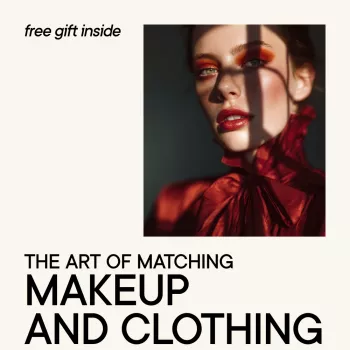
The Art of Matching Makeup and Clothing – Digital Makeup Guide, Color Harmony Beauty eBook, Outfit Coordination Checklist
Keep complexion matching separate
A warm outfit doesn’t require warmer foundation, and a cool outfit doesn’t require cooler foundation. If you’re comparing shades, try them along your jaw, view them in natural light when possible, and give the product time to settle before deciding. Choose a shade and finish you feel comfortable wearing.
Make one final adjustment
Before you leave, look at your clothes and makeup together. Is the outfit’s accent easy to spot? Does one makeup feature have the emphasis you want? If the combination feels too busy, soften one shade rather than starting over.
Our digital guide, The Art of Matching Makeup and Clothing, includes an outfit coordination checklist for returning to these decisions as you try different combinations.
Before choosing, compare the product details with your daily routine, available space, care needs, and preferred setup. The strongest option is usually the one that fits the intended use clearly and remains simple to clean, store, and check before repeat use.
It is also worth checking measurements, material notes, included parts, and compatibility details so the item matches the way it will be used after delivery.
FAQ
Where can I get shade matched for makeup?
Visit a beauty retailer or makeup counter that offers shade-matching help. For foundation, try the suggested shade along your jaw and view it in natural light before deciding.
How to look like a painting makeup?
Choose the painting’s colors and mood as inspiration rather than trying to copy every detail. A softly blended eye or one expressive lip color can create an artistic effect while keeping the look wearable.
What is makeup art called?
It’s often called makeup artistry. Creative looks may also be described as editorial or artistic makeup, depending on their style and purpose.
What foundation do make-up artists use?
Makeup artists use many different foundations, selecting formulas and shades for the person, desired finish, and occasion. For your own routine, prioritize a shade that suits your skin and a finish you like wearing.
See if The Art of Matching Makeup and Clothing – Digital Makeup Guide, Color Harmony Beauty eBook, Outfit Coordination Checklist fits your setup
Was this article helpful?
Yes
No








Leave a comment