-
Shop
- Advanced Technologies
- AI Skills Mastery 2026 Collection
- Apple Accessories
- Baby & Toddler
- Baking & Desserts
- Bathroom
- Budget Travel
- Car Accessories
- Clean & DIY Beauty
- Cleaning & Home Care
- Dating & Social Skills
- Digital Resources
- AI & Technology
- Beauty
- Budgeting & Saving
- Car Buying & Ownership
- Cozy Feast Collection
- Electronics & Technology
- Entrepreneurship & Business Growth
- Financial Education
- Financial Independence
- Financial Mindset & Psychology
- Goal Setting
- Home Styling & Organization
- Kitchen & Recipes
- Leadership
- Mindfulness
- Mindset
- Online Business
- Parenting & Child Development
- Personal Style & Fashion
- Pet Lifestyle & Wellness
- Positive Thinking
- Sleep Improvement
- Smart Life with AI
- Stress Management & Relaxation
- Travel Planning
- Wellness
- Yoga & Fitness
- Yoga & Mind-Body Practices
- Education & Learning
- Family & Parenting
- Family Travel
- Fashion
- Accessories
- Alexander McQueen
- Bags
- Bags & Wallets
- Balenciaga
- Belts
- Blazers
- Blouses & Shirts
- Bottega Veneta
- Bottoms
- Brunello Cucinelli
- Burberry
- Chanel
- Chloé
- Clothing
- Dior
- Dolce & Gabbana
- Dresses
- Etro
- Fendi
- Gucci
- Hats & Hair Accessories
- Hoodies & Sweatshirts
- Jacquemus
- Jewelry
- Jil Sander
- Keychains
- Kiton
- Luggage
- Luggage Bags
- Miu Miu
- Off-White
- Outerwear
- Prada
- Rick Owens
- Saint Laurent
- Scarves
- Socks & Tights
- Sweaters & Cardigans
- The Row
- Tom Ford
- Tops & Shirts
- Valentino
- Valentino Garavani
- Versace
- Vivienne Westwood
- Watches
- Fashion Accessories
- Furniture
- Gadgets
- Halloween
- Health & Beauty
- Health & Wellness
- Home & Garden
- Home Electronics
- Home Supplies
- Kids & Babies
- Kitchen
- Lighting
- Party Planning & Hosting
- Patio, Lawn & Garden
- Personal Growth
- Pet Care
- Pet Supplies
- Pets
- Relationships & Dating
- Self-Care
- Shoes
- Smart Amazon Shopping
- Sport & Outdoors
- Super Deals
- Thanksgiving
- Travel
- Wealth
- Wealth Building
Professional Cordless Hair Clipper for Men: Buying Guide
50% off on product page · save $277.81
Professional Cordless Hair Clipper for Men: Buying Guide
What to Look for in a Cordless Clipper
Start with handling. A grip that feels secure and a weight you can manage matter more during a full haircut than during a quick touch-up. You may need to hold your arm at an awkward angle to reach the crown and back of your head. If the tool feels difficult to control, keeping your passes steady becomes harder.
Next, review the practical details on the product page: runtime, charging method, included guards, blade-care instructions, and whether replacement parts are available. Runtime matters if you prefer to finish a cut without stopping to recharge. Guard options matter because they determine which lengths you can select with the included equipment. Confirm those details before ordering rather than assuming every cordless clipper comes with the same setup.
It also helps to choose the right type of tool. A clipper is meant to cover larger areas of hair and establish the main length. A detail trimmer has a different job: refining outlines around the hairline, ears, and neck. If crisp edges are central to the look you want, plan for an appropriate trimmer rather than expecting a clipper to do every finishing task.

What matters when choosing a clipper
Think about how securely you can hold the tool while reaching the crown and back of your head. Steady, comfortable handling matters during a full cut. Guard lengths matter too: they determine whether you can make the cut you have in mind without removing more hair than intended.
For any cordless clipper, runtime, charging method, included guards, blade-care instructions, and replacement-part availability are useful details to confirm before you decide. We do not want you to assume a particular guard set or runtime from the product name alone.
Featured in this guide
Professional Cordless Hair Clipper for Men
Cordless or corded?
Choose cordless if moving freely is important when you cut your own hair or work around a chair. The trade-off is charge planning: start with enough power for the session. A corded clipper may suit you better if you always cut near an outlet and would rather not manage a battery.
Neither format is right for everyone. Base the choice on where you cut hair and how you prefer to work.
A measured first-cut routine
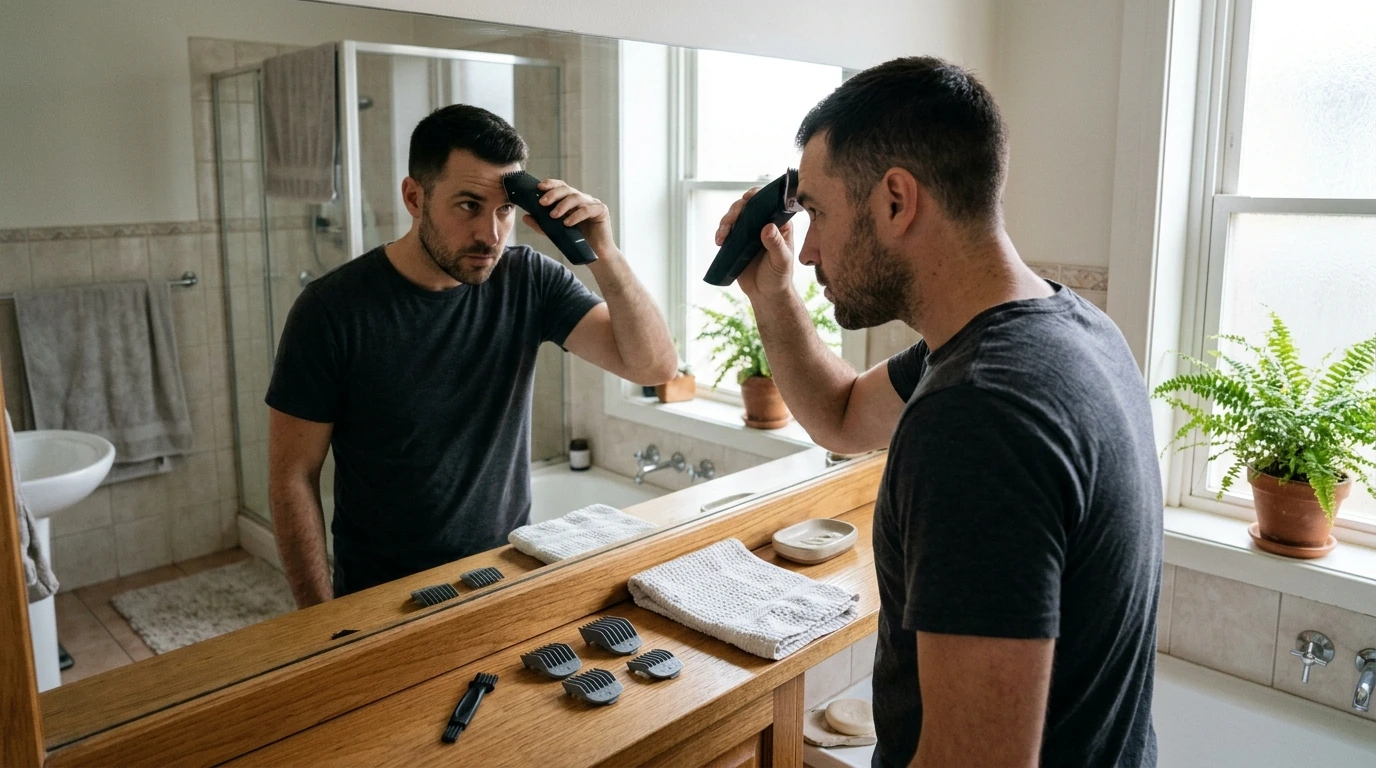
Begin with clean, dry, detangled hair unless your tool’s instructions say otherwise. Set up lighting and mirrors so you can see the sides and back. Select a longer guard than you think you may need, then make controlled passes with the guard seated against your head.
Work through one area at a time and compare both sides often. When blending shorter sides into longer hair, remove small amounts gradually. Reposition yourself to reach the back comfortably rather than twisting your wrist into an awkward angle.
After cutting, follow the manufacturer’s instructions for removing trapped hair, cleaning and caring for the blade, and storing the tool safely. Clean haircutting tools appropriately before sharing them.
A Simple Routine for Better Results
Begin with clean, dry, detangled hair unless your clipper’s instructions direct you otherwise. Set up good lighting and a mirror that lets you inspect the sides and back. Starting with a longer guard gives you room to shorten the cut gradually; hair you leave in place can always be trimmed on another pass.
Move in controlled passes instead of rushing through large sections. Keep the guard seated against your head, work through one area at a time, and pause to compare both sides in the mirror. For the back, change your position as needed so you can guide the clipper comfortably rather than stretching your wrist to reach. If you are blending lengths, make small adjustments and check the result often. Leave detailed outlines to a suitable trimmer if the finish calls for one.
When you are done, follow the manufacturer’s directions for removing trapped hair, cleaning and caring for the blade, and storing the clipper safely. A consistent cleanup routine helps prevent leftover clippings from interfering with your next session. Do not share haircutting tools without appropriate cleaning; the CDC’s hygiene guidance offers a useful reminder about the role of cleanliness in everyday health.
The 6-Piece Goat Hair Eye Shadow Brush Set with Travel Bag works alongside the featured product; it loosens and collects dog hair from car upholstery and seat seams.
FAQ
What are the best professional cordless hair clippers?
There is no single best choice for everyone. Compare verified runtime, guard options, comfort, cleaning requirements, and parts availability against the cuts you plan to do.
What trimmer do professionals use?
Professionals use detail trimmers suited to their finishing work, particularly outlines around the hairline, ears, and neck. A trimmer serves a different purpose from a clipper, which cuts larger areas of hair.
Do barbers prefer corded or cordless clippers?
There is no universal preference. Cordless clippers offer mobility, while corded clippers avoid battery planning; the choice depends on the barber’s workflow and the particular model.
What brand of hair clippers do professionals use?
Professionals use different brands according to their workflow and preferences. Focus on a tool’s verified features, handling, maintenance needs, and suitability for your intended cuts rather than a brand name alone.
See if Professional Cordless Hair Clipper for Men fits your setup
Recommended for you


Was this article helpful?
Yes
No









Leave a comment