-
Shop
- Advanced Technologies
- AI Skills Mastery 2026 Collection
- Apple Accessories
- Baby & Toddler
- Baking & Desserts
- Bathroom
- Black Friday
- Budget Travel
- Car Accessories
- Clean & DIY Beauty
- Cleaning & Home Care
- Dating & Social Skills
- Digital Resources
- AI & Technology
- Beauty
- Budgeting & Saving
- Car Buying & Ownership
- Cozy Feast Collection
- Electronics & Technology
- Entrepreneurship & Business Growth
- Financial Education
- Financial Independence
- Financial Mindset & Psychology
- Goal Setting
- Home Styling & Organization
- Kitchen & Recipes
- Leadership
- Mindfulness
- Mindset
- Online Business
- Parenting & Child Development
- Personal Style & Fashion
- Pet Lifestyle & Wellness
- Positive Thinking
- Sleep Improvement
- Smart Life with AI
- Stress Management & Relaxation
- Travel Planning
- Wellness
- Yoga & Fitness
- Yoga & Mind-Body Practices
- Education & Learning
- Family & Parenting
- Family Travel
- Fashion
- Accessories
- Alexander McQueen
- Bags
- Bags & Wallets
- Balenciaga
- Belts
- Blazers
- Blouses & Shirts
- Bottega Veneta
- Bottoms
- Brunello Cucinelli
- Burberry
- Chanel
- Chloé
- Clothing
- Dior
- Dolce & Gabbana
- Dresses
- Etro
- Fendi
- Gucci
- Hats & Hair Accessories
- Hoodies & Sweatshirts
- Jacquemus
- Jewelry
- Jil Sander
- Keychains
- Kiton
- Luggage
- Luggage Bags
- Miu Miu
- Off-White
- Outerwear
- Prada
- Rick Owens
- Saint Laurent
- Scarves
- Socks & Tights
- Sweaters & Cardigans
- The Row
- Tom Ford
- Tops & Shirts
- Valentino
- Valentino Garavani
- Versace
- Vivienne Westwood
- Watches
- Fashion Accessories
- Furniture
- Gadgets
- Halloween
- Health & Beauty
- Health & Wellness
- Home & Garden
- Home Electronics
- Home Supplies
- Kids & Babies
- Kitchen
- Lighting
- Party Planning & Hosting
- Patio, Lawn & Garden
- Personal Growth
- Pet Care
- Pet Supplies
- Pets
- Relationships & Dating
- Self-Care
- Shoes
- Smart Amazon Shopping
- Smart Home Living Guides
- Sport & Outdoors
- Super Deals
- Thanksgiving
- TikTok Growth & Monetization Mastery
- Travel
- Wealth
- Wealth Building
Slow Feeder Bowls for Dogs: Downsides to Consider
83% off on product page · save $55.47
Slow Feeder Bowls for Dogs: Downsides to Consider
Some dogs find the obstacles frustrating
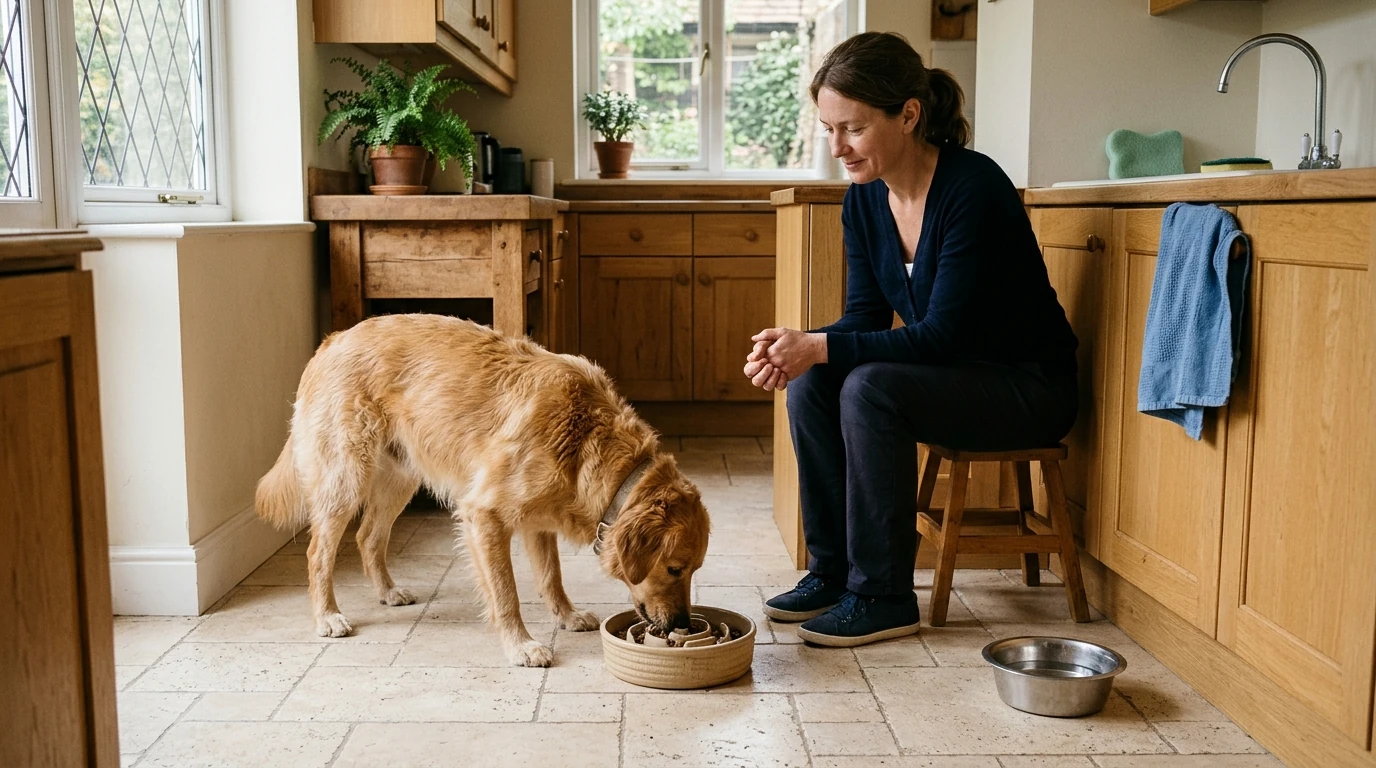
A bowl with ridges or narrow spaces may make it hard for a dog to reach food, especially if the pattern is deep relative to the dog’s muzzle or the pieces of food being served. If your dog paws at the bowl, tips it, gives up before finishing, or seems distressed at mealtime, try a simpler pattern or a different way to slow eating rather than making the meal harder.
Check the product’s listed specifications when evaluating some dogs find the obstacles frustrating.

Slow feeders can take more work to clean
Food can collect around dividers and in corners, so a slow feeder may require more attention than a smooth bowl, particularly when you serve wet food. Wash it after meals as appropriate, inspect the grooves for residue, and follow the bowl’s care instructions; if you cannot easily reach every food-contact surface, a simpler design may be more practical.

Featured in this guide
Adjustable Elevated Slow Feeder Dog & Cat Bowl – Raised Food & Water Dish
The wrong fit can make meals awkward
A bowl that slides, tips, or crowds your dog’s muzzle can turn mealtime into a struggle, while a raised setup also needs to place food where your dog can eat comfortably. Our guide to the Adjustable Elevated Slow Feeder Dog & Cat Bowl is a starting point for considering a raised option, but you should still watch your dog eat and decide whether the position and feeding pattern suit them.
Check the product’s listed specifications when evaluating the wrong fit can make meals awkward.
Slower eating does not solve every feeding concern
A slow feeder changes how your dog accesses food; it does not determine the right portion, treat an underlying health problem, or guarantee that a dog will stop gulping. If your dog regularly coughs, gags, vomits, or shows discomfort around meals, talk with your veterinarian instead of relying on a bowl change alone, and supervise the first few meals with any new feeder.
Check the product’s listed specifications when evaluating slower eating does not solve every feeding concern.
FAQ
Do vets recommend slow feeder bowls?
A veterinarian may suggest a slow feeder for a dog that eats too quickly, but the recommendation depends on the dog and the reason for the fast eating. Ask your vet if your dog has recurring symptoms at mealtime or you are unsure whether a feeder is appropriate.
See if Adjustable Elevated Slow Feeder Dog & Cat Bowl – Raised Food & Water Dish fits your setup
Was this article helpful?
Yes
No







Leave a comment